How to Back Up a MySQL Database from the Command Line

%203.png&w=256&q=75)
mysqldump: The Standard MySQL Backup Tool
mysqldump is a command-line utility included with every MySQL and MariaDB installation. It exports one or more databases as a plain SQL file — a series of CREATE TABLE and INSERT INTO statements that reconstruct the database from scratch when run against a fresh MySQL instance.
You need MySQL credentials with at least SELECT, LOCK TABLES, and SHOW VIEW privileges on the databases you want to back up. For a dedicated backup user, run: GRANT SELECT, LOCK TABLES, SHOW VIEW ON *.* TO 'backup_user'@'localhost' IDENTIFIED BY 'password';
Backing Up a Single Database
The --single-transaction flag is critical for WordPress and other InnoDB databases — it takes a consistent snapshot without locking any tables, meaning the site stays responsive during backup. The --quick flag writes rows one at a time instead of buffering them in memory, which prevents crashes on large databases.
Backing Up All Databases at Once
The --events, --routines, and --triggers flags include stored procedures, functions, and event scheduler definitions that are otherwise omitted from the default dump.
Restoring from a mysqldump Backup
Storing Credentials Safely for Automated Backups
Avoid putting passwords directly in cron command lines or scripts. Use a MySQL option file instead:
For a cron line that runs at 3am daily and keeps 14 days of backups: 0 3 * * * mysqldump my_db | gzip > /backups/$(date +\%Y\%m\%d).sql.gz && find /backups -mtime +14 -delete
CloudStick Makes Database Backups Point-and-Click
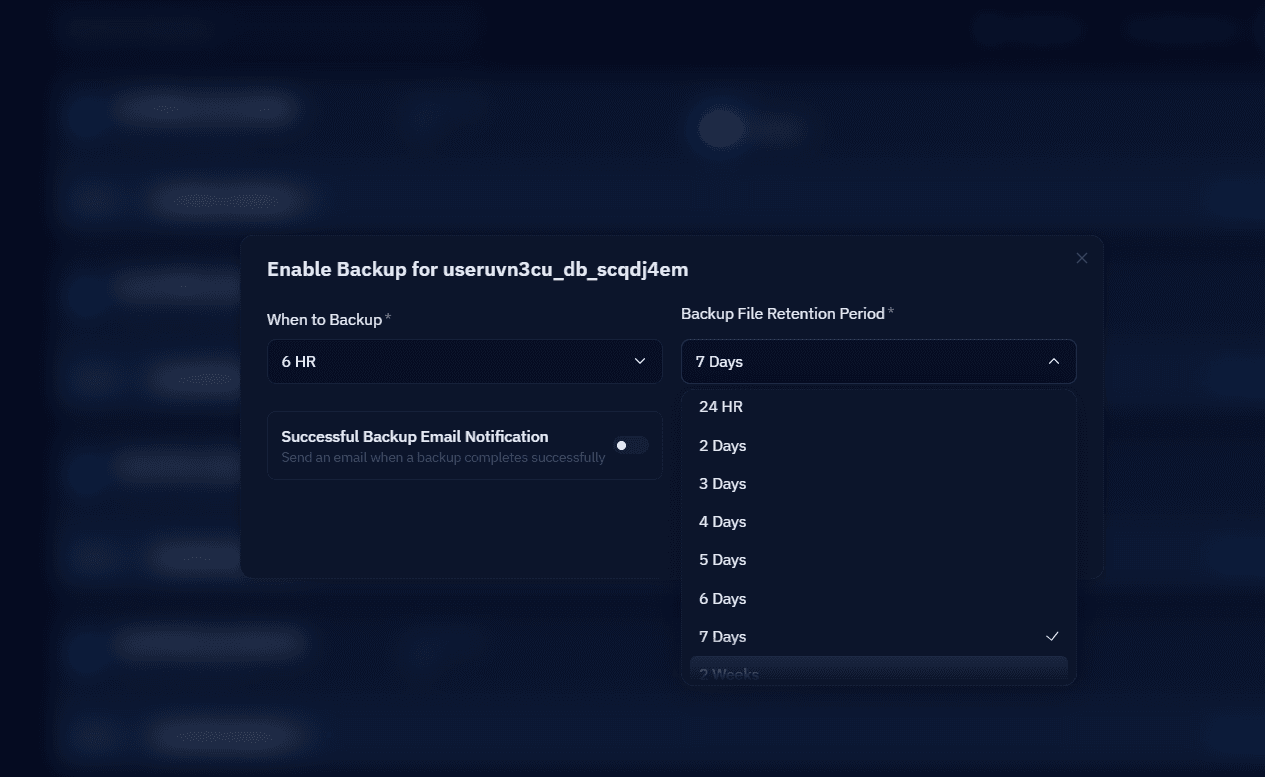
CloudStick's Database Backups section handles mysqldump, compression, storage, and retention automatically — you enable backup per-database, set the schedule and retention period, and CloudStick runs the dump on schedule and stores it in managed offsite storage.
See the CloudStick knowledge base: How to Download a Database Backup to Localhost for the step-by-step walkthrough of downloading a specific backup file from the dashboard for local restore testing.