How to Standardize Server Setups Across All Client Sites

%203.png&w=256&q=75)
The Problem With Bespoke Client Stacks
Twenty client sites with twenty different configurations means every support ticket starts from zero. One site is on PHP 8.1 because it was set up two years ago, another is on 8.3 because it was migrated last month. One has nightly backups with 30-day retention, another has weekly backups nobody checked in months. One runs a hand-picked set of five plugins, another has fourteen, three of which nobody remembers installing.
This is bespoke drift, and it is the single biggest multiplier of agency support time. When a PHP deprecation warning breaks a client's checkout page, you cannot apply the fix you learned last week to any other site, because no two sites share the same PHP version, the same plugin baseline, or the same server stack. Every incident is a fresh investigation instead of a five-minute pattern match.
Standardizing does not mean forcing every client onto identical themes or content. It means the underlying infrastructure — PHP version, web server stack, plugin baseline, backup policy — is the same everywhere, so the things that actually break (a plugin conflict, a memory limit, a missed backup) generalize across your whole client base instead of being one-off mysteries.
Pick One Default PHP Version And Stack
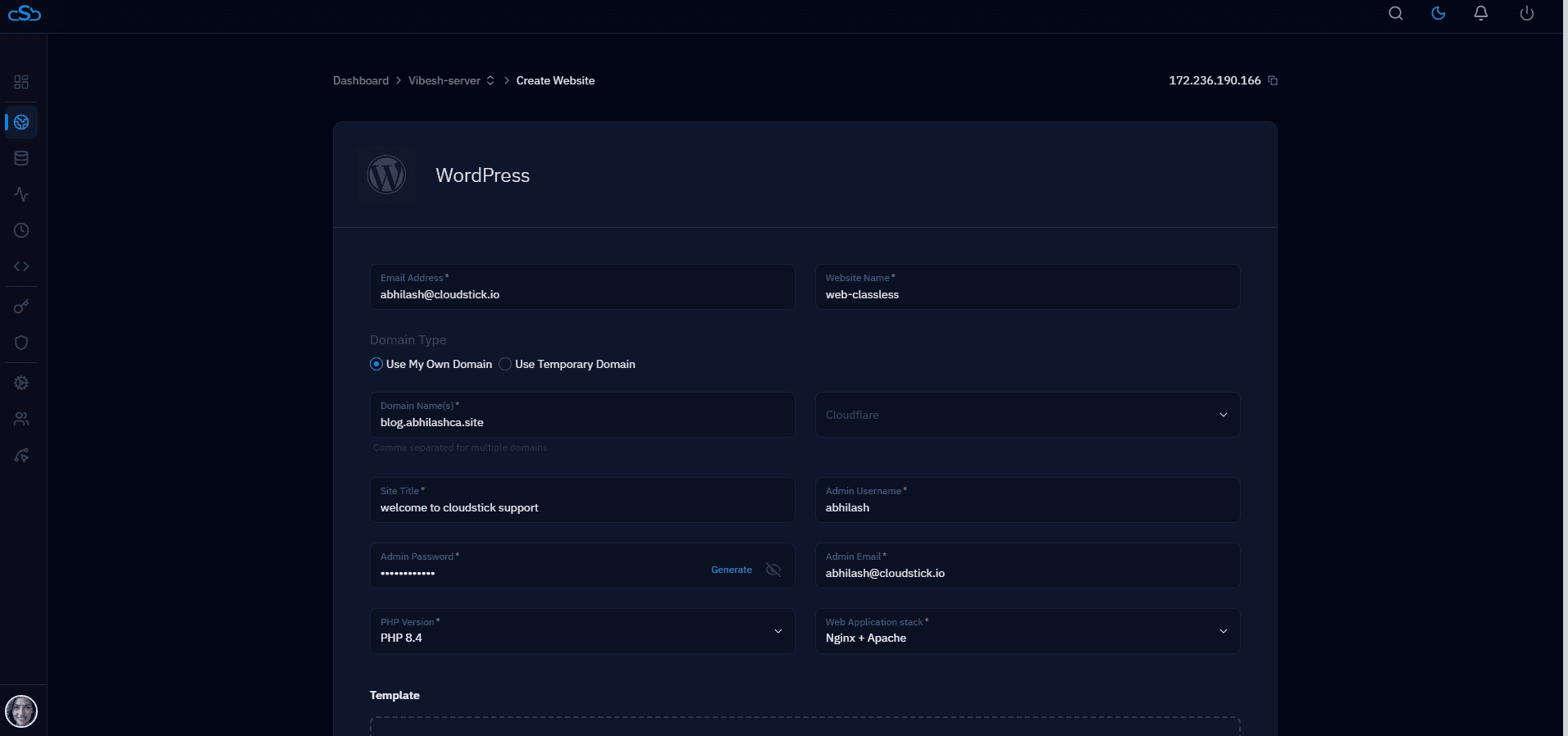
Every new client site should launch on the same PHP version and the same web server stack, chosen once and reused, not re-decided per project. Pick the newest PHP version your core plugins and themes actually support — as of mid-2026 that is typically PHP 8.3 for a fresh WordPress build, with PHP 8.2 as the fallback for sites still carrying older commerce plugins.
Write the decision down as a rule, not a memory: "New sites launch on PHP 8.3 with Nginx + PHP-FPM unless a plugin compatibility issue forces 8.2." That single sentence stops the drift at the source, because nobody has to make a fresh judgment call for each new client.
CloudStick makes this easy to enforce because each site gets its own isolated PHP-FPM pool (php81cs-fpm through php84cs-fpm run side by side on the same server), so you can standardize new sites on one version while leaving legacy sites untouched until you are ready to migrate them — no shared PHP binary to coordinate around, and no risk that bumping one client's version breaks another's pool.
Template The WordPress Baseline
Every new WordPress install should start from the same plugin and theme baseline, applied by script instead of by memory. Decide on your minimum viable stack once — typically a caching plugin, a security/firewall plugin, an SEO plugin, a form plugin, and a backup plugin — and then install it the same way on every new site with a WP-CLI script instead of clicking through the plugin repository each time.
Save this script in your agency's internal repo and run it as the last step of every new-site provisioning checklist. When a plugin update breaks something on one client site, you already know exactly which other sites run the same plugin at the same version, because the baseline is identical everywhere.
Standardize Backup Retention
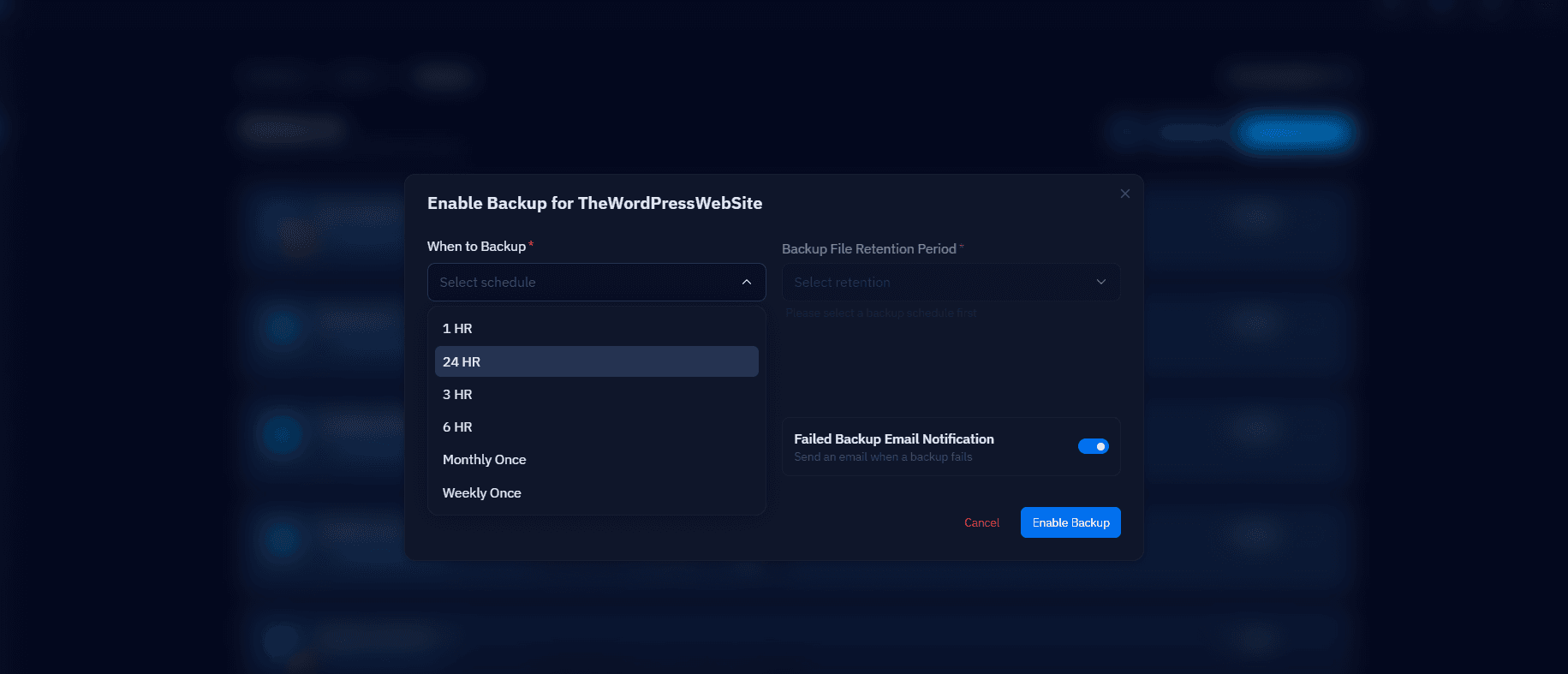
Every client site should run on the same backup schedule and retention window, not whatever the client happened to ask for or whatever was left on defaults. A reasonable agency-wide default is a daily database backup with 14-day retention plus a weekly full-site backup with 30-day retention — enough to recover from a bad plugin update or a compromised admin account without burning excessive storage.
CloudStick's per-database backup scheduling lets you set that same daily/weekly cadence and retention window on every client's database from the Visual Database Manager, so you are configuring one policy across your fleet instead of remembering a different schedule per client — and when a client asks "can you restore from three days ago," the answer is always yes, because the policy never varied site to site.
Document And Enforce The Standard
A standard that lives only in one engineer's head is not a standard, it is a habit that dies the day they take vacation. Write the baseline down in a single internal document: default PHP version, default stack, the exact plugin list and versions, the backup schedule and retention, and the one-line justification for any exception (a client's legacy plugin that forces PHP 8.2, for example).
Treat every exception to the standard as a tracked decision, not a one-off. If a client's site needs PHP 8.2 instead of 8.3, log why in the same document — otherwise "just this once" quietly becomes the new normal for the next five sites your team provisions.
Review the document quarterly and bump the default PHP version and plugin baseline as new releases stabilize, then apply the update to new sites going forward — you do not need to retrofit every existing client overnight, just stop the drift from getting wider.
Next Steps
Start with new sites, not your entire existing portfolio. Set the default PHP version and stack this week, save the WP-CLI baseline script in your team's shared repo, and set the same backup schedule and retention on every site you provision from today onward.
Once new sites are consistent, work backward through your existing client list opportunistically — the next time you touch a site for any reason, bring its PHP version, plugin baseline, and backup policy in line with the standard before you close the ticket. Within a couple of quarters, most of your fleet converges, and the next 2am support call becomes a pattern you have already solved instead of a fresh investigation.