The Best Server Control Panels in 2026 (Honest Comparison)

%203.png&w=256&q=75)
Why Panel Choice Matters
Your server control panel is the layer that sits between you and every server you manage. It determines how quickly you can deploy a new site, how you handle SSL renewals, how your team collaborates, and how you recover when something breaks. A good panel fades into the background and accelerates your work. A poor one creates friction, missing features, or — in the case of older enterprise panels — unexpected licensing bills that arrive months into a project.
The server panel market in 2026 is split between three categories: legacy enterprise panels (cPanel, Plesk, DirectAdmin) that were built before cloud infrastructure existed and have been retrofitted to the modern web; modern SaaS panels (CloudStick, RunCloud, Ploi, ServerPilot) that were born in the cloud era and integrate natively with cloud providers; and open-source self-hosted tools (HestiaCP) that give you maximum control but require more operational overhead.
This comparison covers all eight major panels currently in active use — CloudStick, RunCloud, cPanel, Plesk, DirectAdmin, ServerPilot, Ploi, and HestiaCP. We've evaluated each on pricing model, feature completeness, developer experience, and suitability for the three most common use cases: solo developers, agencies, and resellers.
The Contenders in 2026
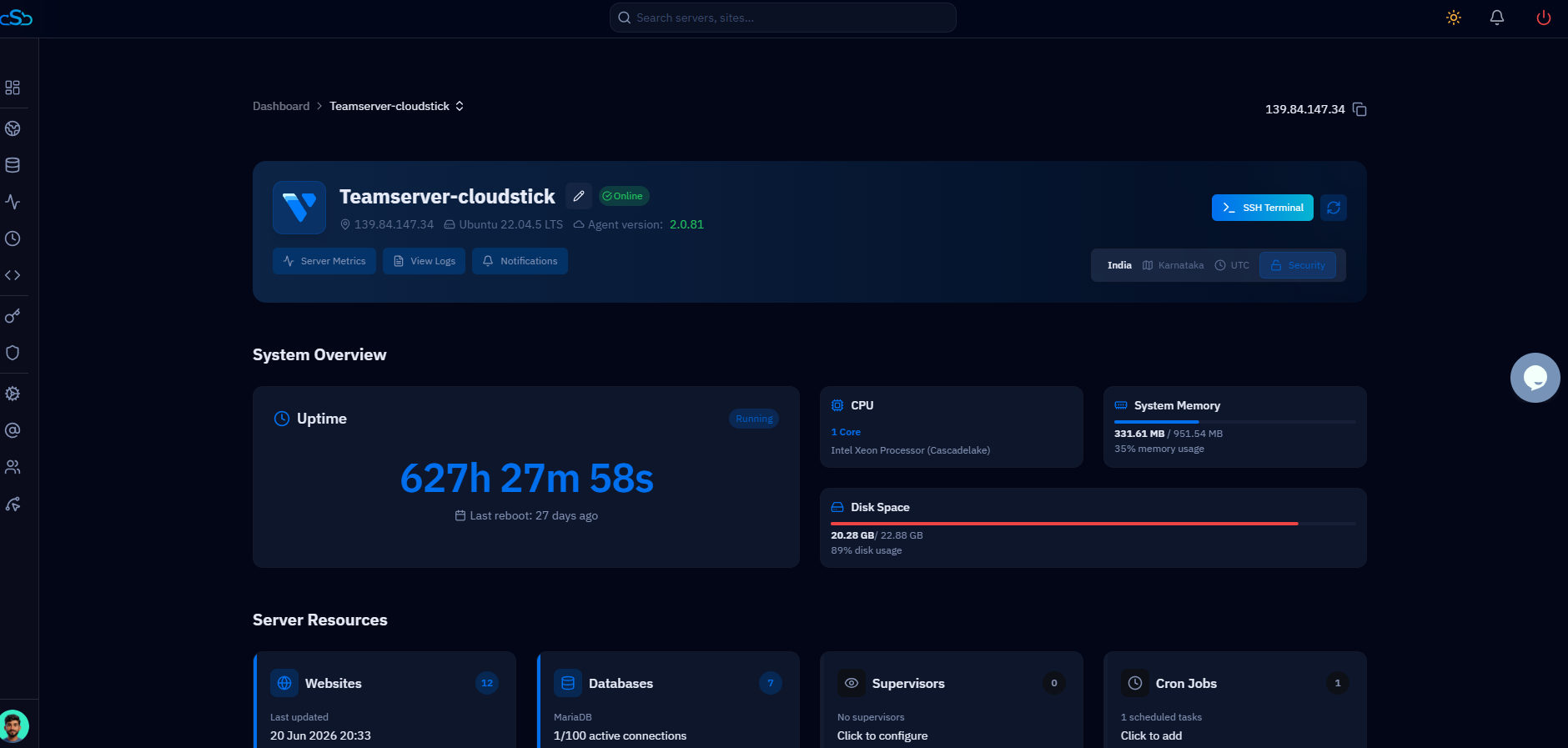
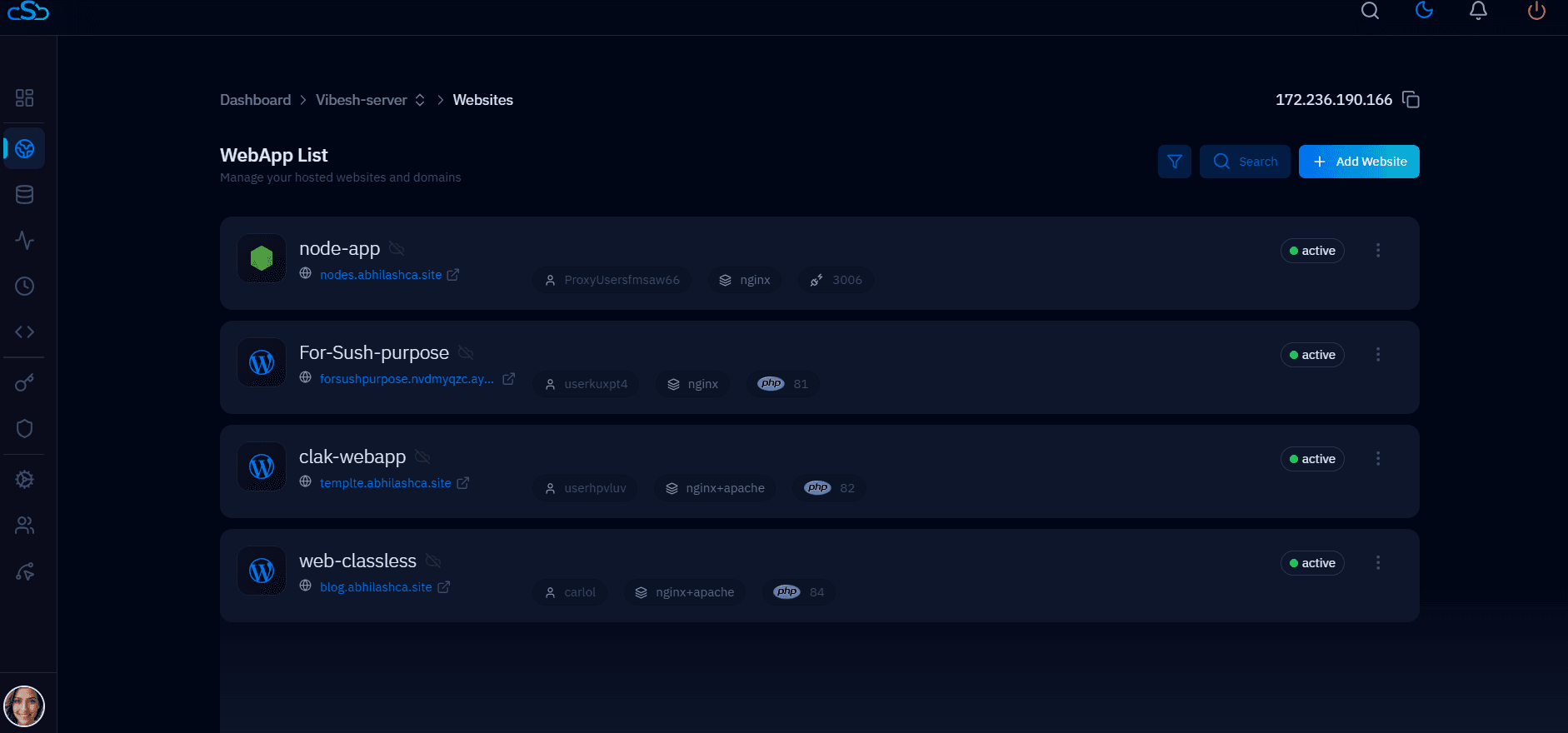
CloudStick is a modern SaaS control panel built for agencies and developers who want complete server management — Nginx, PHP-FPM, MySQL, email hosting, SSL, firewall, backups, DNS, and WordPress management — from a single dashboard. Flat-rate pricing means no per-site or per-domain fees at any tier. Actively developed with regular feature releases.
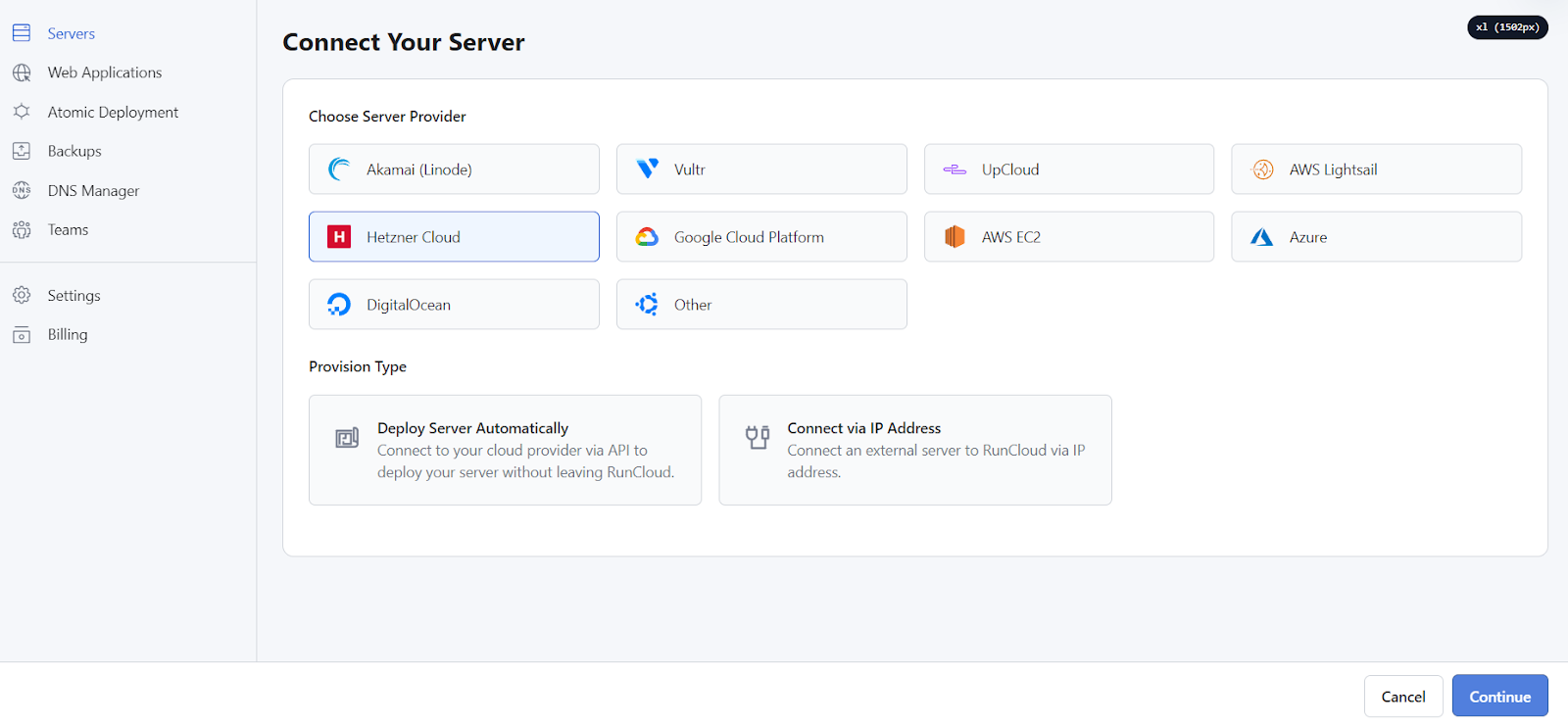
RunCloud is another modern SaaS panel popular in the Laravel and WordPress developer community. Strong fundamentals for PHP deployment and site management. Does not include email hosting. Per-server pricing on lower tiers, unlimited on Business.
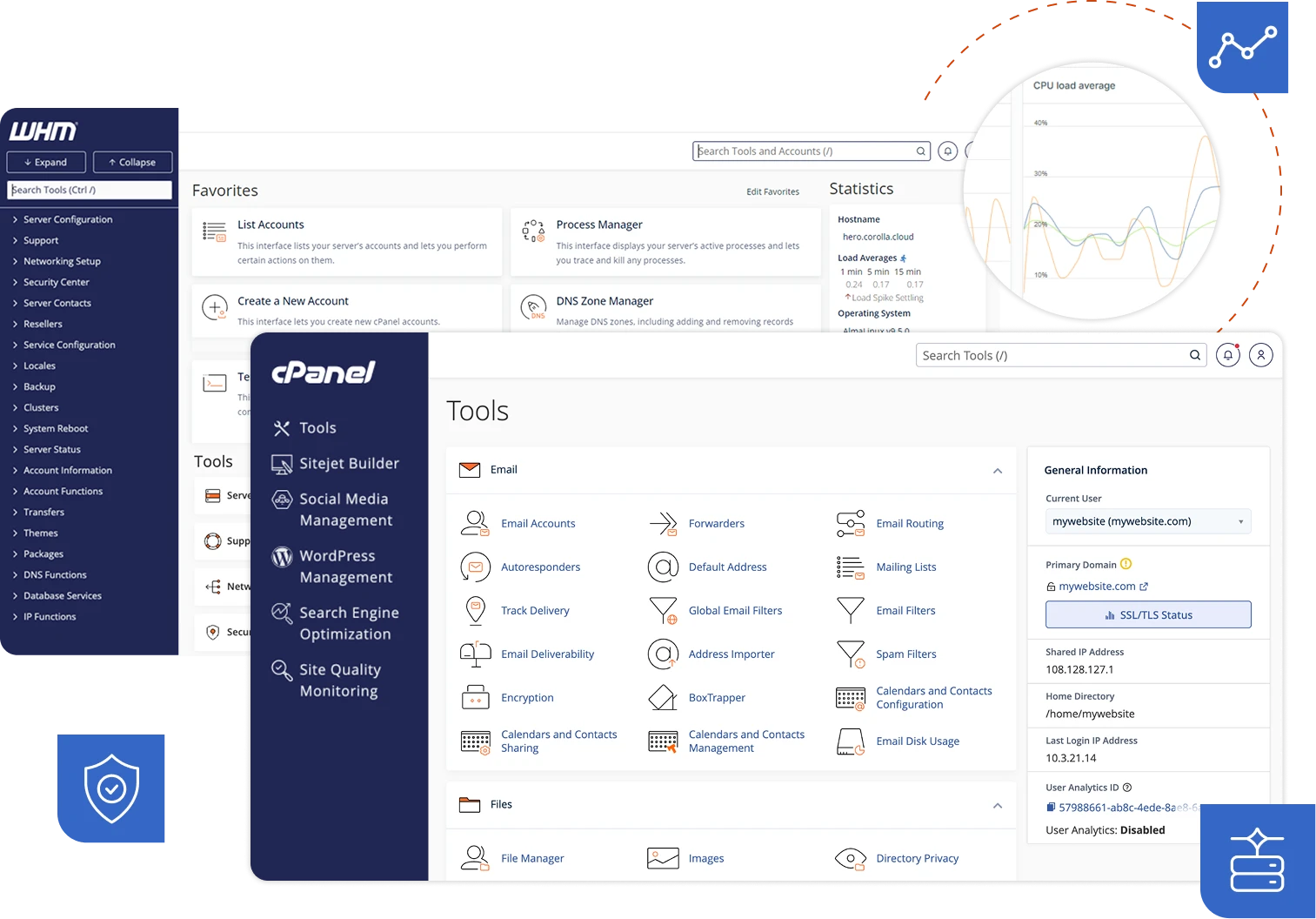
cPanel is the oldest and most widely deployed control panel in shared hosting. It's what most web hosts run under the hood, and what most hosting customers have seen. Rich feature set covering hosting administration at scale, but built for shared hosts rather than VPS owners. Pricing moved to account-based licensing in 2019, which dramatically increased costs for small operations.
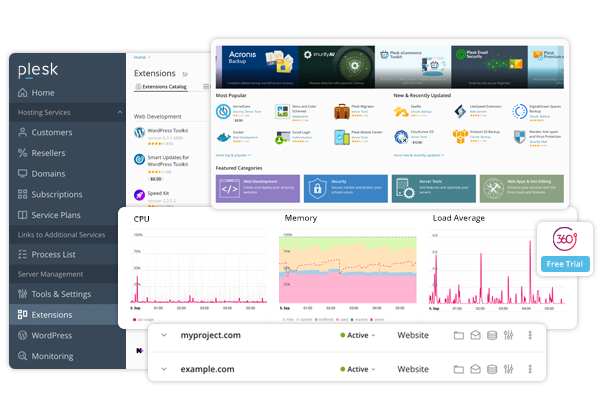
Plesk is a direct cPanel competitor targeting web agencies and hosting providers. Runs on both Linux and Windows servers, which makes it unique among major panels. Feature-rich but complex, and the domain-tier pricing model adds up quickly once you're managing more than a handful of sites.
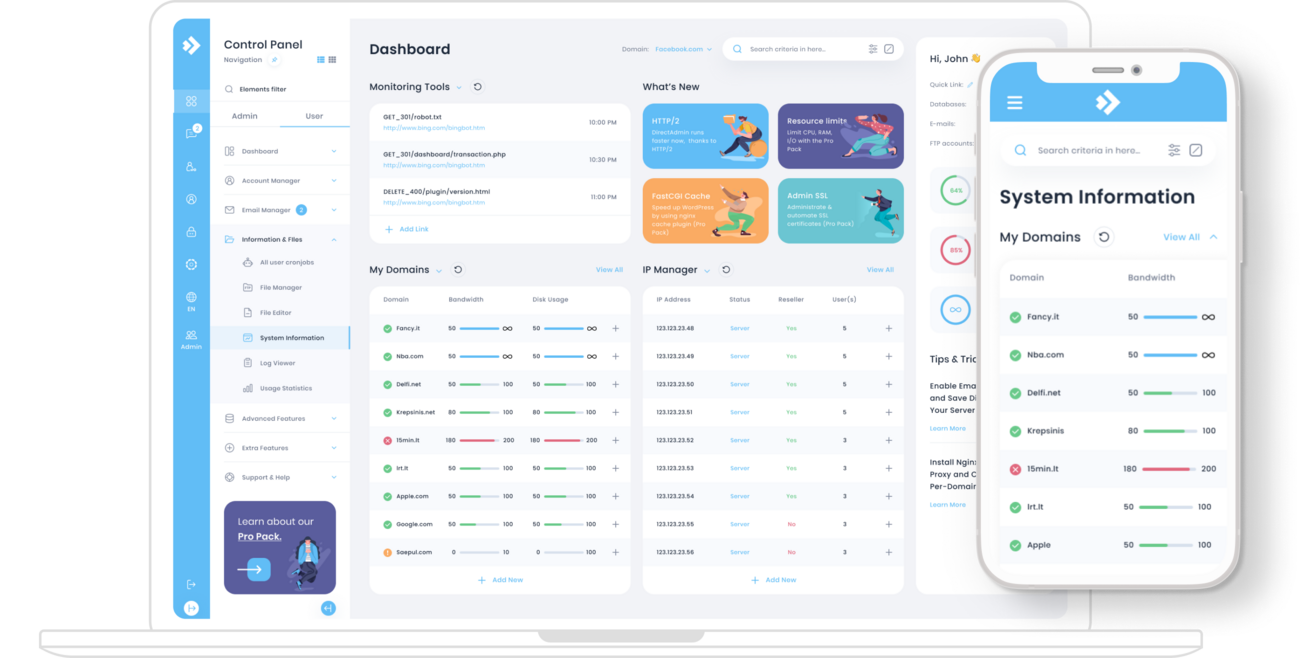
DirectAdmin is a lighter-weight alternative to cPanel that predates the cloud era. More affordable than cPanel and Plesk, but the UI feels dated and the ecosystem is smaller. Popular with budget-conscious hosting providers who need traditional shared hosting management.
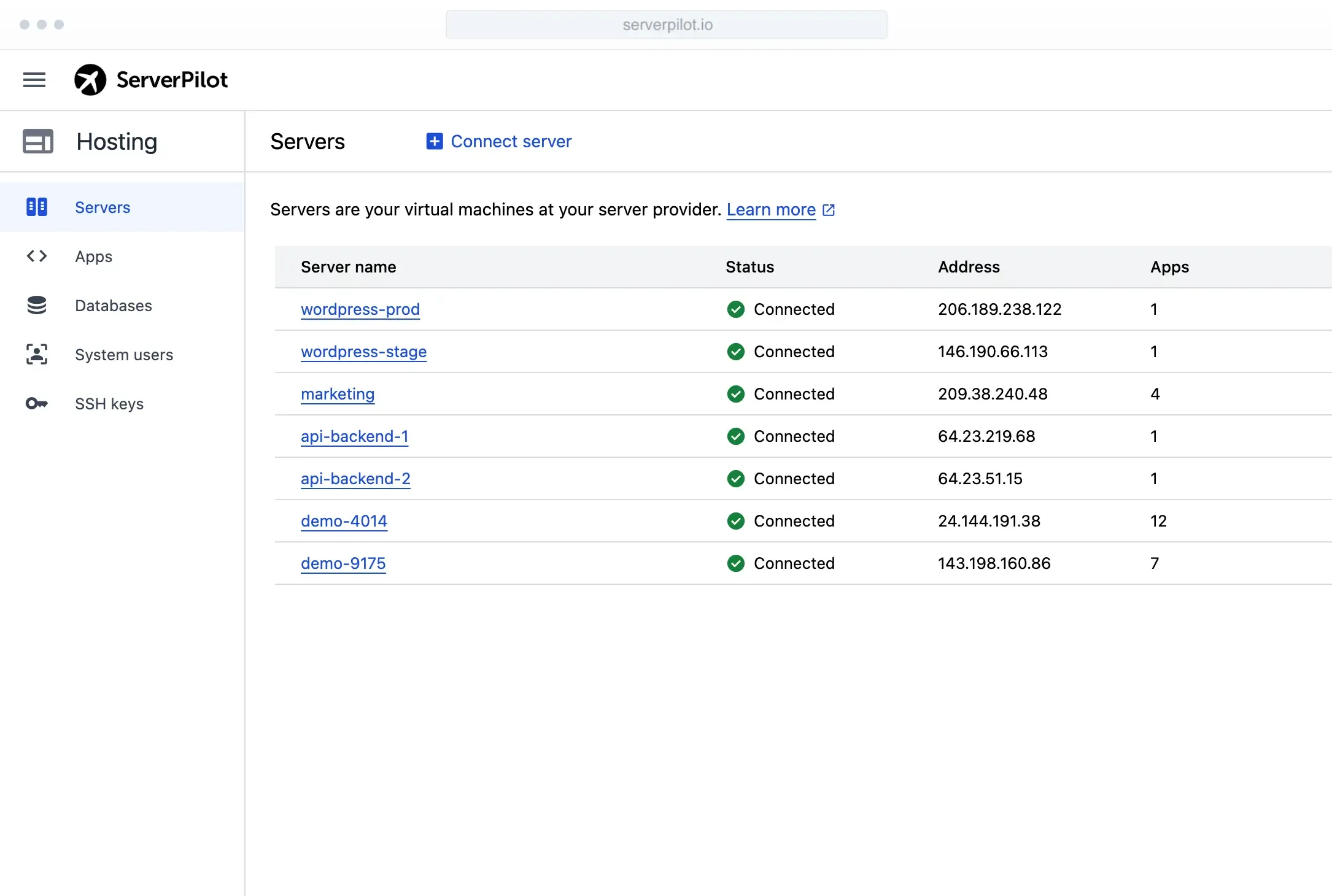
ServerPilot was one of the first SaaS panels and helped popularize the model of connecting a VPS to a cloud dashboard. Development has been stagnant for years — no email hosting, no visual DB manager, no team seats. Still functional for simple PHP deployments, but does not keep pace with modern requirements.
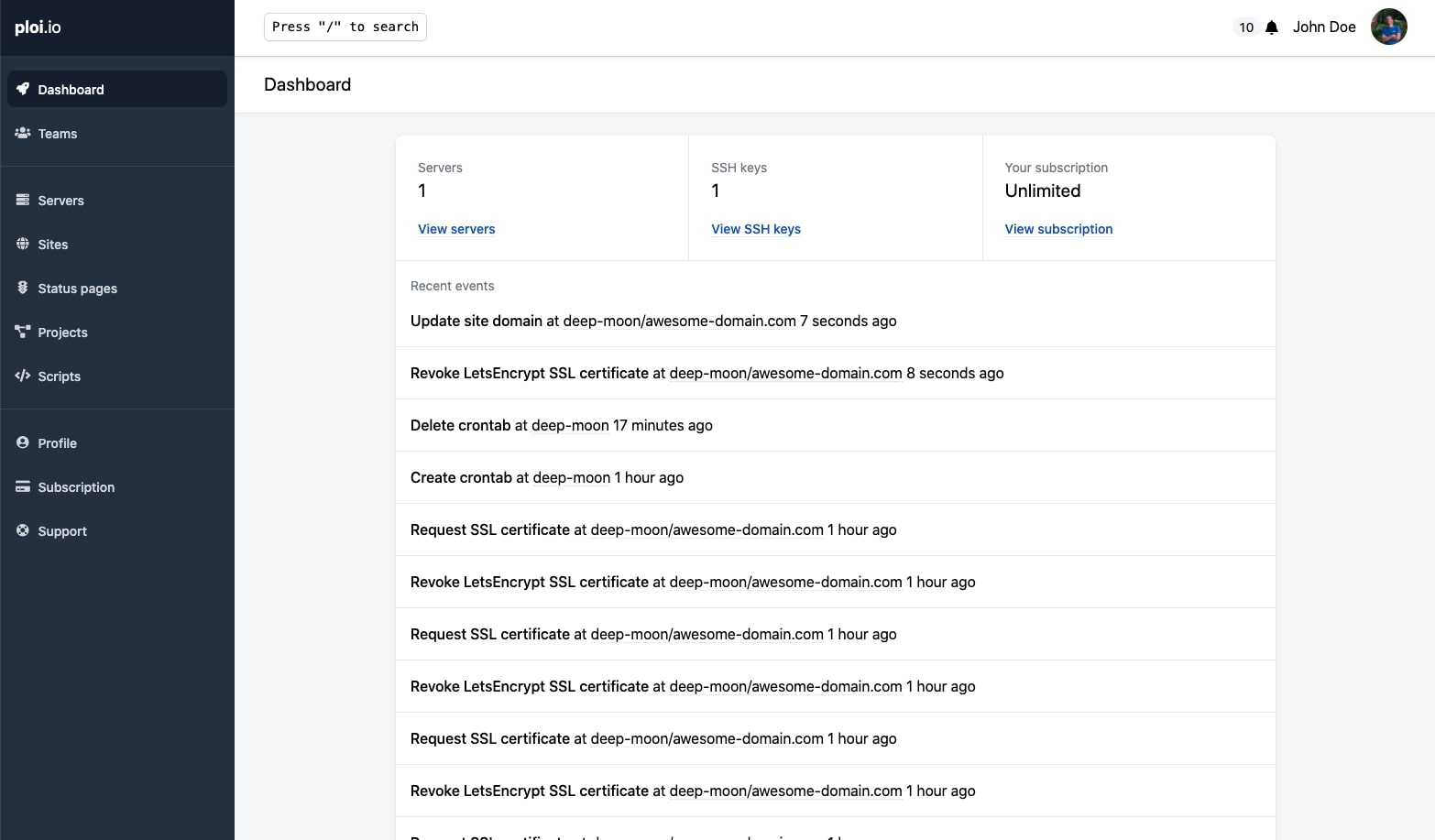
Ploi is a newer SaaS panel with a clean interface and strong focus on Laravel and PHP deployments. Good Git deployment workflow and Forge-like developer experience. Per-server pricing. Lacks some of the breadth that CloudStick offers in email hosting and WordPress tooling.
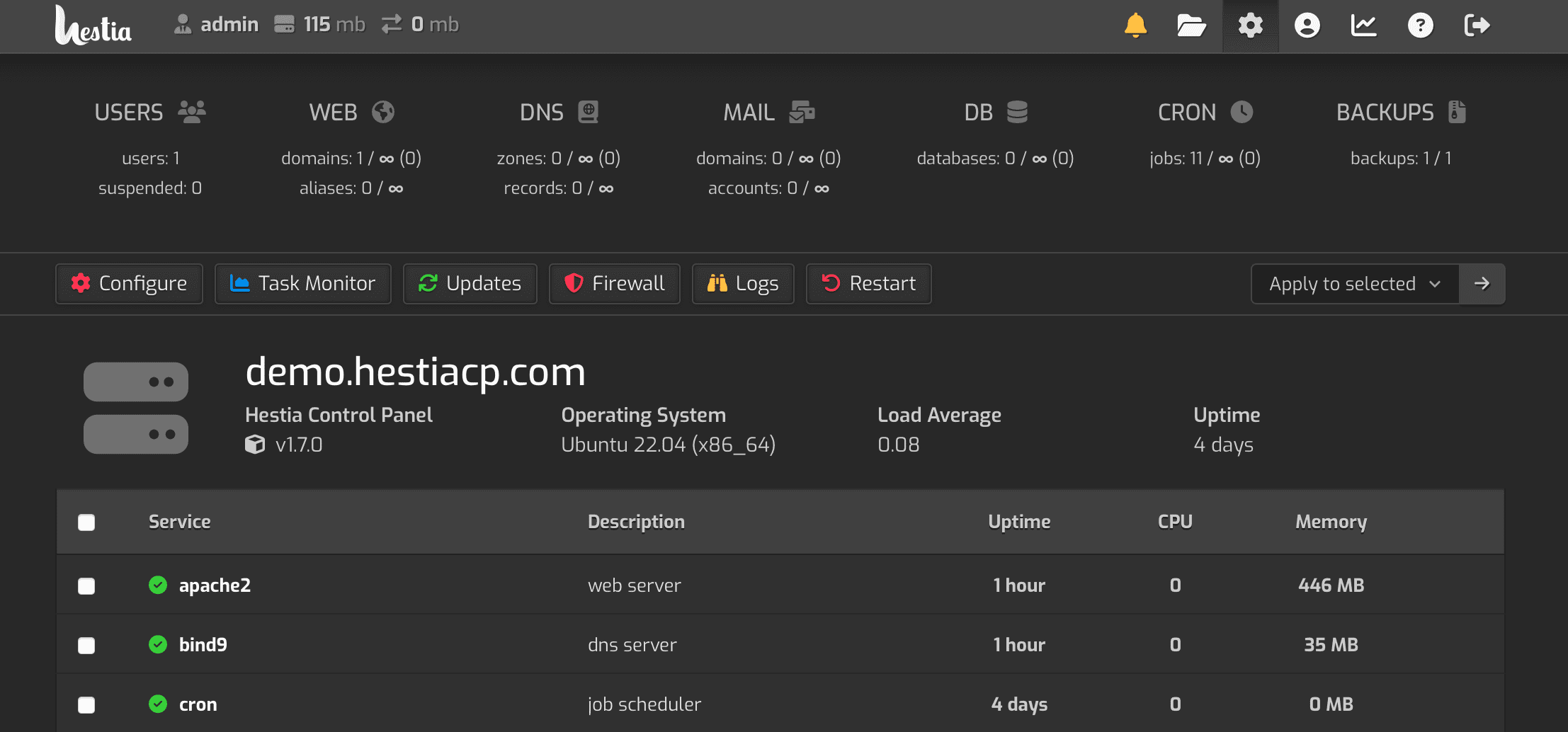
HestiaCP is a free, open-source panel forked from VestaCP. It runs on your own server — there's no SaaS component — and supports web, email, DNS, and database management. The best option if you want zero monthly fees and are comfortable administering the panel itself. Not suitable for teams who need a hosted dashboard or SLA support.
Pricing Side by Side
Pricing in the server panel market varies enormously — from free open-source tools to enterprise licenses that cost hundreds of dollars per month. The model matters as much as the number: per-server, per-domain, per-account, or flat-rate pricing each has different implications as you scale.
cPanel's account-based pricing deserves special attention. The base license fee is just the beginning — you also pay per cPanel account (per hosting customer), which means costs scale with your client count rather than your server count. A shared hosting setup with 100 client accounts can easily reach $30–$50/month in licensing alone, before adding anything else.
CloudStick's flat-rate model is the most predictable for growing agencies. You pay $19/month regardless of whether you're running 3 servers or 30, hosting 10 sites or 300. That pricing certainty makes budgeting straightforward and removes the anxiety of growth triggering an unexpected pricing tier change.
Feature Depth Comparison
Every panel on this list handles the basics: web server configuration, PHP management, SSL, and database creation. The differences emerge at the second and third tier of features — the ones that determine how productive you can be when managing a large number of sites or a demanding client portfolio.
Email hosting is absent from RunCloud, ServerPilot, and Ploi. If you need to provide email to clients, you handle it outside the panel — either by installing a mail server manually or routing clients to a third-party service. CloudStick, cPanel, Plesk, DirectAdmin, and HestiaCP all include built-in email hosting with mailbox management and DNS configuration.
WordPress tooling varies significantly. CloudStick has the most comprehensive WordPress Manager of any panel in this comparison — plugin management, bulk updates, auto-update configuration, debug mode, Magic Link login, and WordPress Templates for rapid site deployment. cPanel and Plesk offer WordPress Toolkit as an add-on with similar depth. RunCloud, Ploi, DirectAdmin, ServerPilot, and HestiaCP offer basic one-click install without deep WordPress integration.
Backup management is a critical feature that many panels treat as secondary. CloudStick integrates with Amazon S3, DigitalOcean Spaces, and other S3-compatible storage for automated off-server backups with configurable retention policies. cPanel and Plesk also have solid backup integrations. RunCloud has backup support. ServerPilot and Ploi offer more limited backup options.
Team collaboration separates the panels designed for agencies from those designed for solo developers. CloudStick includes team seats on all paid plans, with role-based access control. cPanel and Plesk support multi-user setups but the account model is more complex. ServerPilot has no team features. Ploi supports team members on higher tiers. HestiaCP has basic admin/reseller roles.
White-label reselling is only available in CloudStick (Business plan at $49/month), cPanel, and Plesk. If you want to offer managed hosting under your own brand — with your logo on the dashboard and your domain in the URL — CloudStick's Business plan is by far the most affordable path. cPanel and Plesk white-label setups typically require a reseller license that costs several times more.
Best for Each Use Case
Solo developer, 1–3 servers, PHP/Laravel apps: Ploi or RunCloud both offer a clean, developer-focused experience at $8/month per server. If you need email hosting, CloudStick's Basic plan at $9/month covers one server with everything included. HestiaCP is an option if you want zero ongoing cost and are comfortable with self-management.
Agency managing 5–30 servers with multiple clients: CloudStick Pro at $19/month is the clear winner. Unlimited servers, unlimited sites, email hosting, team seats, WordPress Manager, visual DB manager, and advanced firewall — all at a price that RunCloud's Business plan ($40/month for unlimited servers) doesn't match on either price or features. The math is unambiguous for any agency running more than two servers.
Traditional shared hosting provider: cPanel remains the industry standard for shared hosting environments where clients expect the familiar cPanel interface and where you need deep integration with WHMCS for billing. The per-account licensing cost is painful, but the ecosystem of compatible plugins, themes, and client expectations makes migration difficult at scale.
Windows server management: Plesk is the only major panel that natively supports Windows Server. If you run Windows-based infrastructure, Plesk is your only real option in this comparison.
Budget-constrained operation, technical team: HestiaCP is genuinely capable for a team that doesn't need a SaaS interface and is comfortable managing the panel server alongside their web servers. The zero licensing cost is real, and the feature set is broader than many SaaS panels at the entry tier. The trade-off is operational overhead — you own the panel infrastructure as well as the sites.
White-label reseller offering managed hosting: CloudStick Business at $49/month is the most cost-effective path to offering branded managed hosting. Connect unlimited servers, add your logo and domain, and deliver a polished control panel experience to clients without the cost overhead of a cPanel reseller license or Plesk Web Pro/Host license.
Our Picks
After evaluating all eight panels on pricing, features, active development, and real-world usability for common agency and developer workflows, here is where each one lands.
Best overall for agencies: CloudStick. The combination of flat-rate pricing, complete feature set (including email hosting and WordPress Manager), active development, team collaboration, and white-label reselling makes it the most versatile option for agencies at any scale. The $19/month Pro plan covers unlimited servers and delivers more than any other panel at that price point.
Best for solo PHP/Laravel developers: Ploi or RunCloud. Both offer a clean, developer-focused experience at $8/month per server. If your needs are simple — deploy apps, manage PHP, push via Git — either works well. CloudStick is worth the extra dollar if you need email hosting.
Best for traditional shared hosting: cPanel. The licensing costs are high, but the ecosystem depth and client familiarity make migration hard to justify for established shared hosting operations.
Best free option: HestiaCP. Capable, actively maintained, and genuinely free. Requires a technical team willing to manage the panel itself.
Avoid unless you have a specific reason: ServerPilot. Stagnant development, missing core features, and per-server pricing that doesn't scale well. Any of the other panels in this list serve the same use case better.
For agencies managing multiple client servers, CloudStick offers the best combination of flat pricing, full feature set, and active development in 2026. Try it free for 7 days — no credit card required — to see how it handles your real workload before committing. Start at cloudstick.io.
The server panel market has never been more competitive than it is in 2026. Agencies no longer have to choose between a feature-complete legacy panel with high licensing costs and a lightweight modern panel that misses email or team tools. CloudStick closes that gap entirely.